

The Most Epic Place in Maui - Part I
We need to normalize a different kind of vacation. Vacations that look like enjoying rather than consuming. Connecting versus isolating. I think there's this default version we all think we need, which is going to places to consume a culture, a place, or a thing. However, I'm convinced that on most of those vacations, I come back more exhausted, broke, and burnt out. It's so interesting to me that we have been sold this concept, and I think it first occurred to me when I was thinking about self-care. We briefly touched on it in my social work program, but the different types of self-care can include the following (maybe you can think of more):
Physical - exercise, diet, sleep, massage
Emotional - hobbies, independent forms of expression, maybe connecting with one really close person
Mental/Intellectual - reading, learning
Social - participating in group activities, community connection, events
Spiritual - religious, meditation, values-based
Practical - financial, organization of life, appointments
I think people assume they need this immaculate getaway vacation, but we don't check in with ourselves and ask 'What do I really need right now'. We don't always need a beach day to feel better, but it takes knowing yourself and being reflective to be able to assess, 'alright what is my body asking for?'. When people go to the islands for their holiday or vacation, are they coming here thinking it's going to give them what they need, or are they identifying what they need before they come here. I think this is a really good tool to think about, before jetting off anywhere to get your spark back.
So I jetted off...with the goals of physical, emotional, and spiritual self-care.
Hitching to Haleakalā National Park
Next time you're in Maui, especially as a backpacker, consider a hitch. You build a connection to the community. You learn about people and hear their stories. People who live here have so much knowledge and understanding of the land. Better than any purchased tour, talk to your friendly locals, attempt a hitch, and offer a tip for the drive.
Day 1
We arrived at the airport in Maui around 10 AM. It was a quick flight over from Oahu. We spent some time walking around in town first, allowing our bodies to adjust to the humid tropical air. It was easy to find public transit from the airport to downtown. It was only $4 for two people to get across town. While walking around, we got coffee at a truck, Kraken, and sat down at a small convenience store after purchasing some water bottles to make a game plan for our trip.
Hitchhiking
We started hitching off of Highway 37 and got our first ride a mile up, and we were offered some trail magic in granola bars. Our ride was originally from LA, and she was now living in Maui.
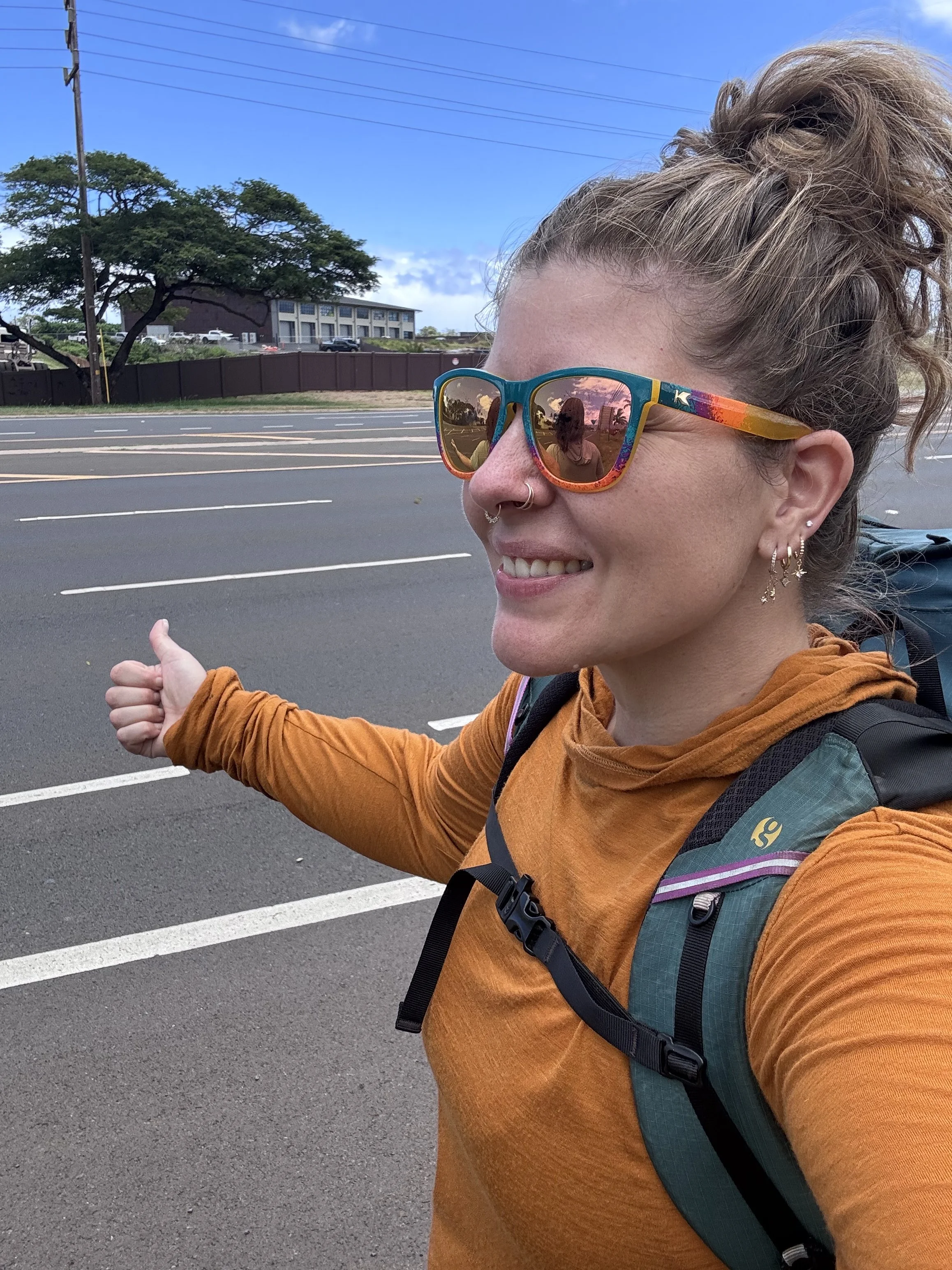
Image Source: Paige Combs, "Hitching at Highway," June 2026.
Our second hitch was local with a truck, and she took us about 11 miles to the nearest town on the outskirts of the park. Neapolitan's hair was flying all over the place, and we could feel the air become cooler and drier as we climbed in elevation. Our third hitch was a mom with an 8-year-old daughter. She told us stories about how, when she first moved here, she would hitchhike all the time because she didn’t have a car. We talked about how much had changed after COVID. I expressed that I think the phenomenon is global, and a lot has changed after the pandemic. The miles went fast, and she dropped us off at the community Kula. Our final hitch of the day got us to our campground for the night, Hosmer Grove Campground.
The couple was both originally from LA and visiting from Texas. The gentleman and I gabbed about Santa Cruz and the famous pink umbrella man who used to walk the streets. Our ride was a former musician, and he traveled around the world. After they dropped us off, between bouts of rainfall, we set up our tent and hid underneath an awning with picnic benches to eat our dinner. Mine was a salami tortilla wrap with cheese.
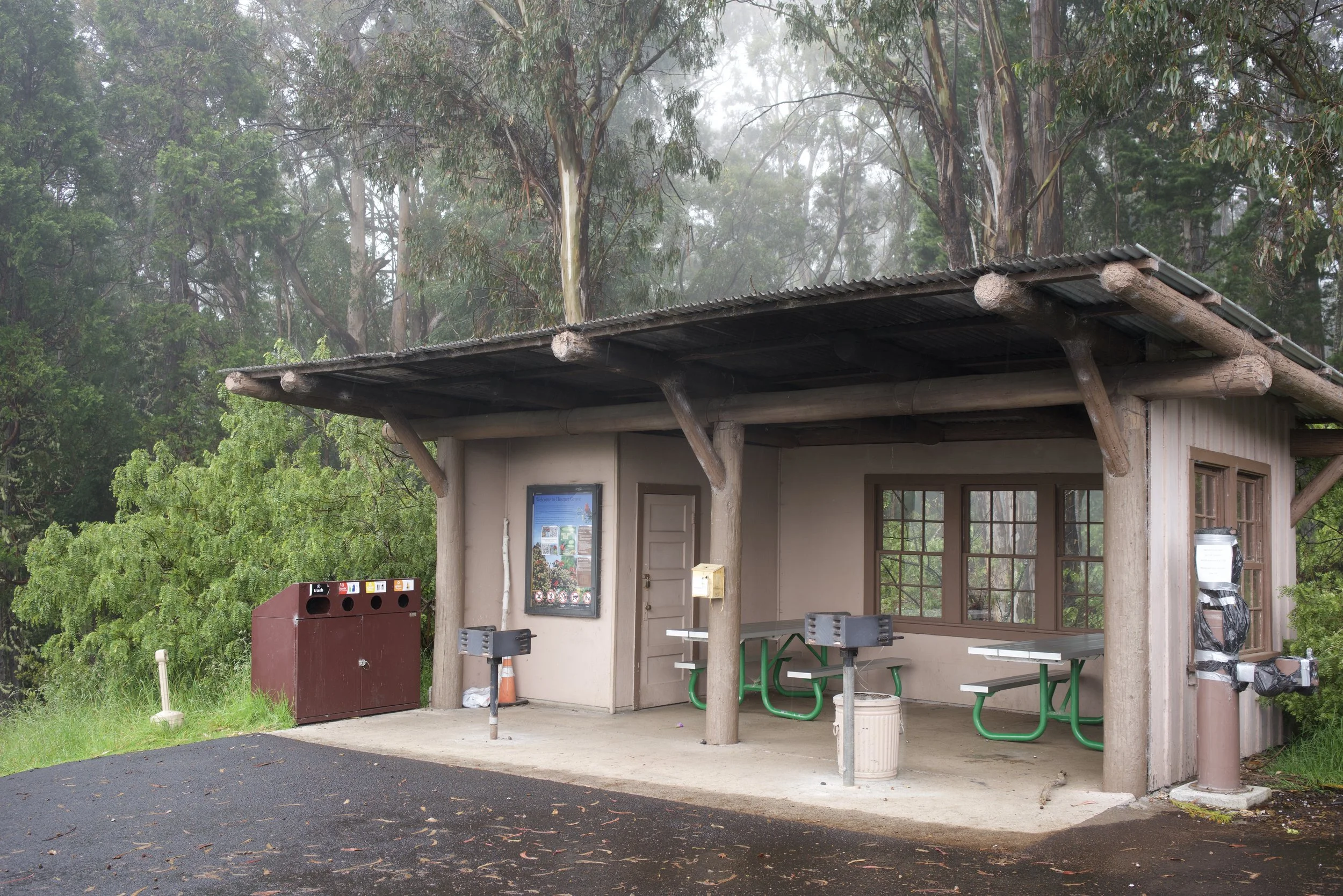
Image Source: Paige Combs, "Perfect Hideout," June 2026.
Hosmer Grove Campground
We settled in that evening at our campsite. Despite the rain and misty weather, we hiked a small trail around the grounds and walked up to the road. Before bed, I wished for a beautiful sunny day the next day, even though our weather was supposed to be overcast and rainy the entire week.
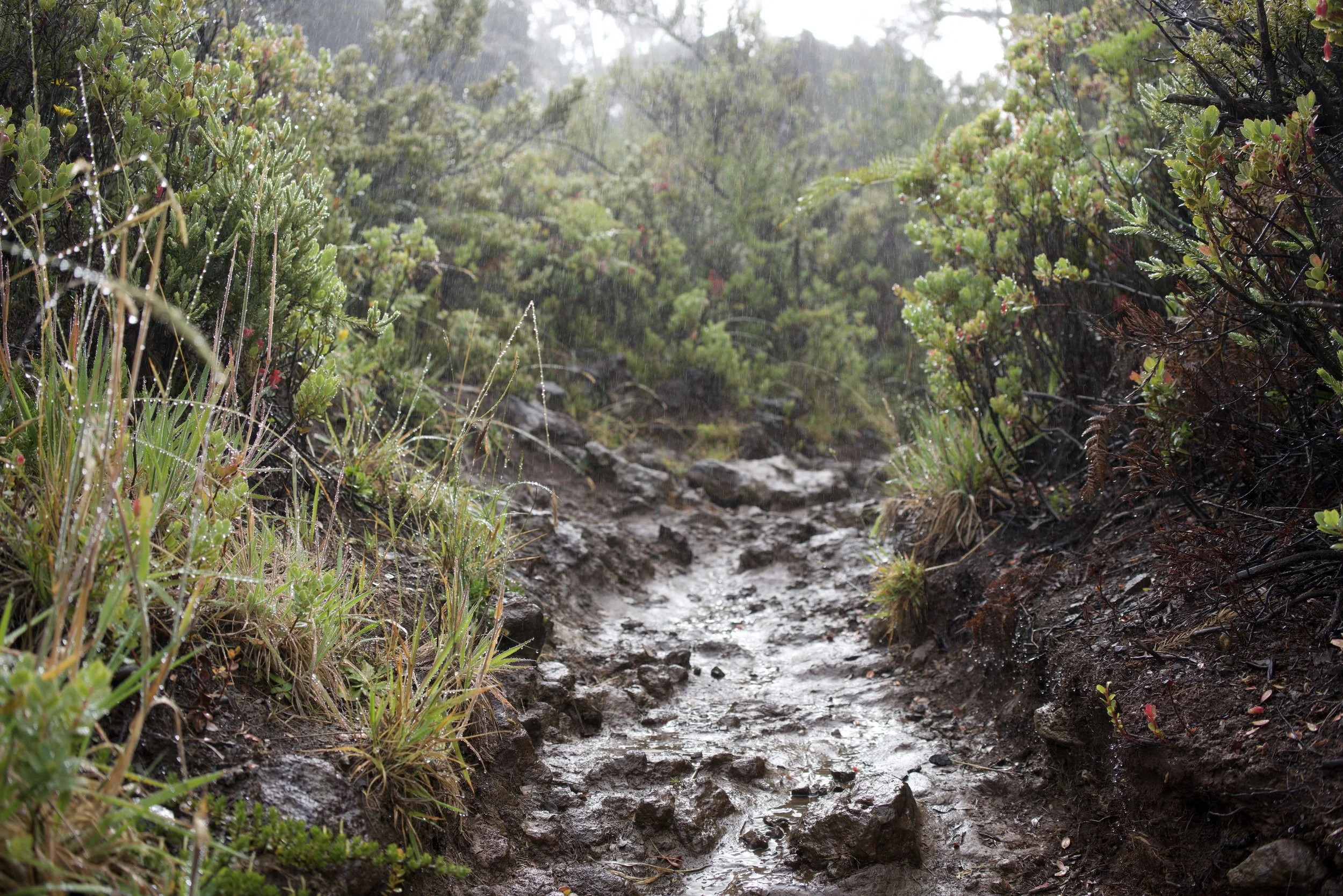
Image Source: Paige Combs, "Muddy Trail," June 2026.
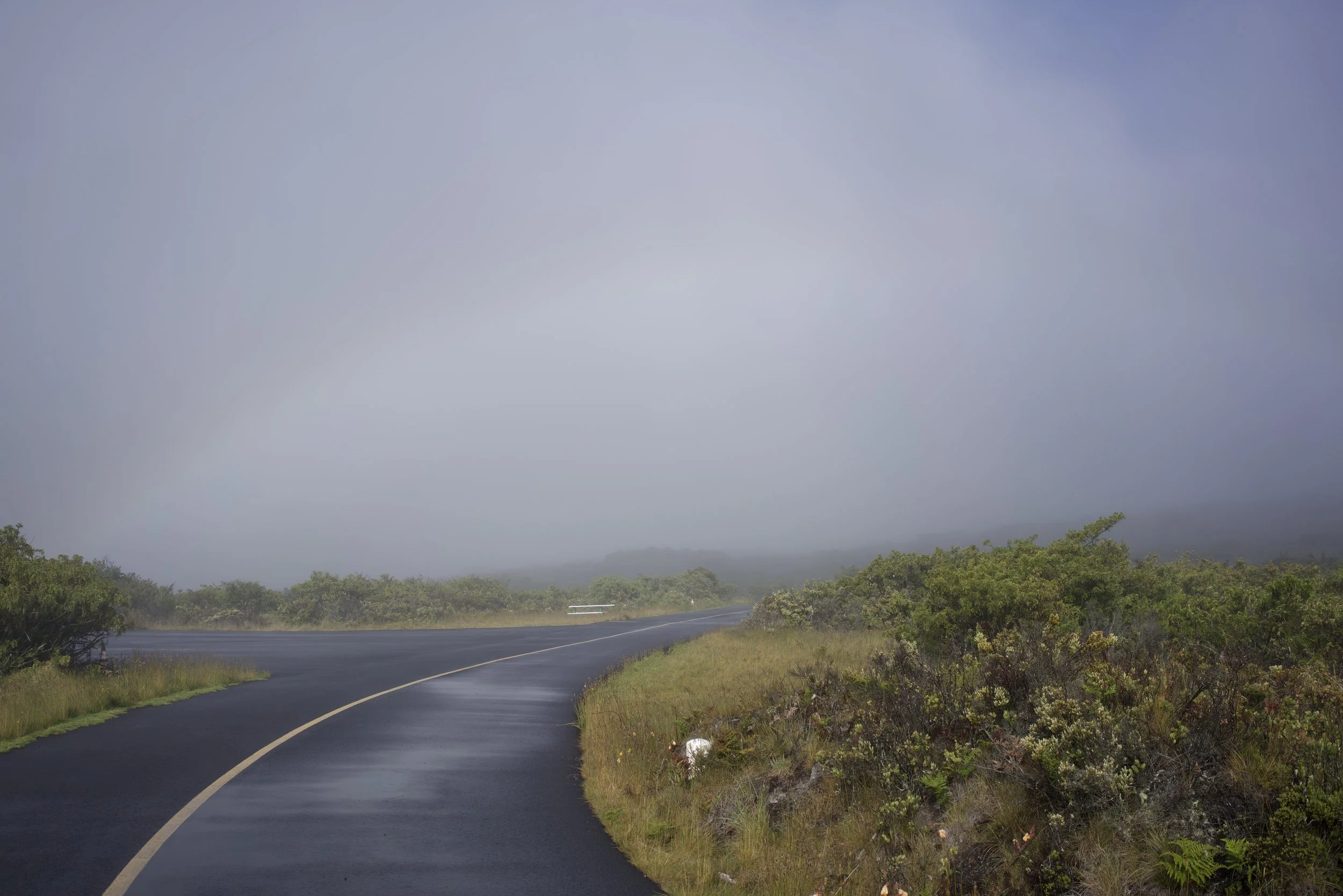
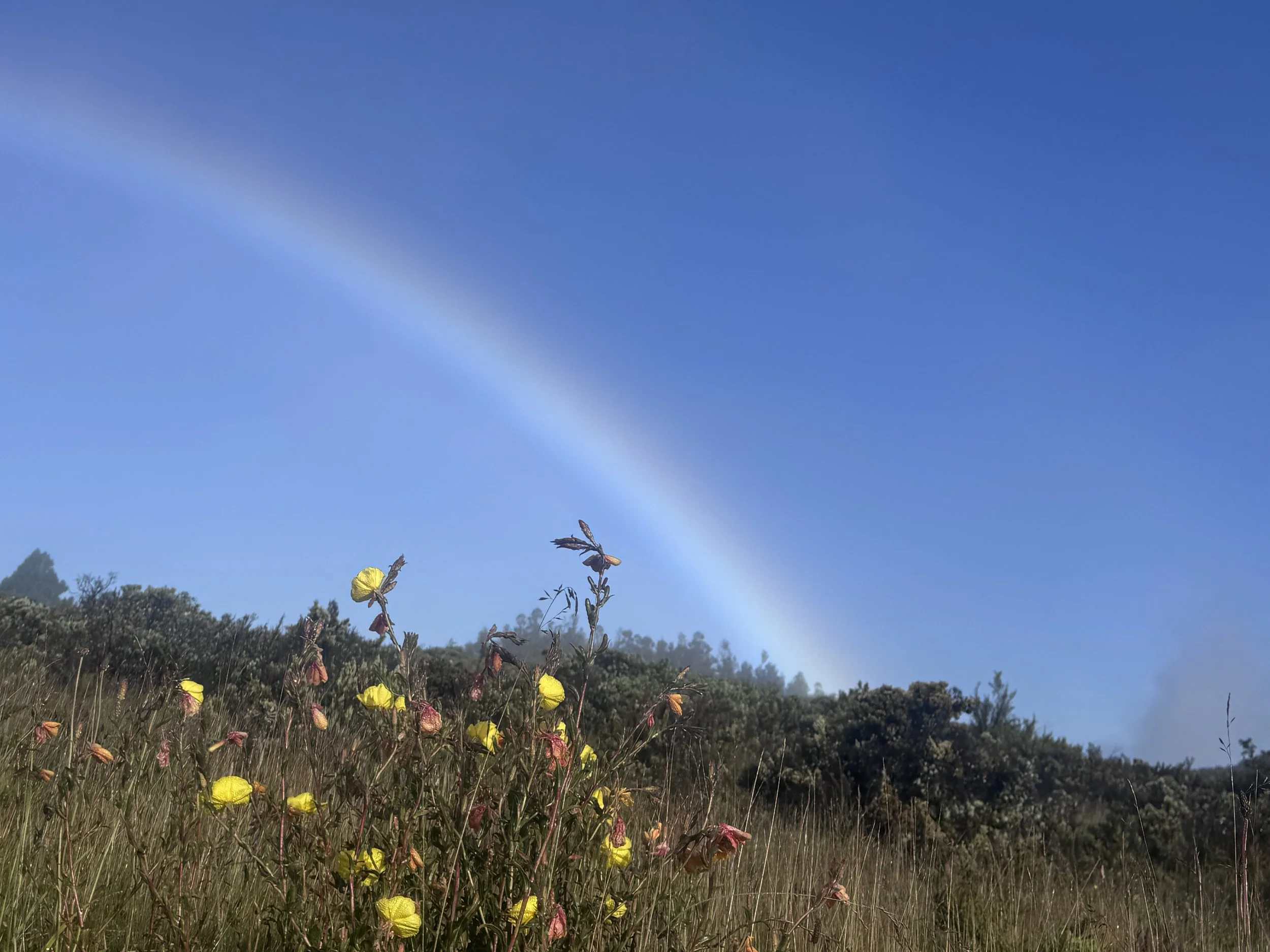
Image Source: Paige Combs, "Rainbow Over the Road," June 2026.
The Weather Gods Answered
We got up early that morning. I opened my eyes, and I kid you not, I saw pockets of blue in that big, beautiful sky. Still wet and drizzly, but less than yesterday, I started my typical morning routine, packing up my gear and dragging my things over to the covered benches so I could make some coffee and food. It already started to feel like a successful trip, but I knew we still had to make it to the top of the crater to begin our hike.
Day 2
Around 7 AM, we started hiking back to the road and caught our first hitch from a ranger in his personal vehicle. He took us to the first visitor center. The second hitch was more challenging. We stood in front of the visitor center attempting to hitch a ride to the top for about an hour.
The visitor center opened at 8:30 AM, so we took a break and popped in. We took photos of the map of our route and verified mileage. Once satisfied, we went back out and continued our hitching attempts. A family pulled over and picked us up. A Biologist who used to live on the islands with his wife and two kids. They were there on a big trip, and he said this was one of his favorite parks. We chatted about nature and hiking. We drove up the final bit of elevation and reached the sunny top. Not a cloud in sight.
I was so excited once we got there. As a hitchhiker, you never know when you’re going to get somewhere. Who you are going to meet or what will happen, but somehow there’s always a kind soul willing to pick you up and get you to your destination.
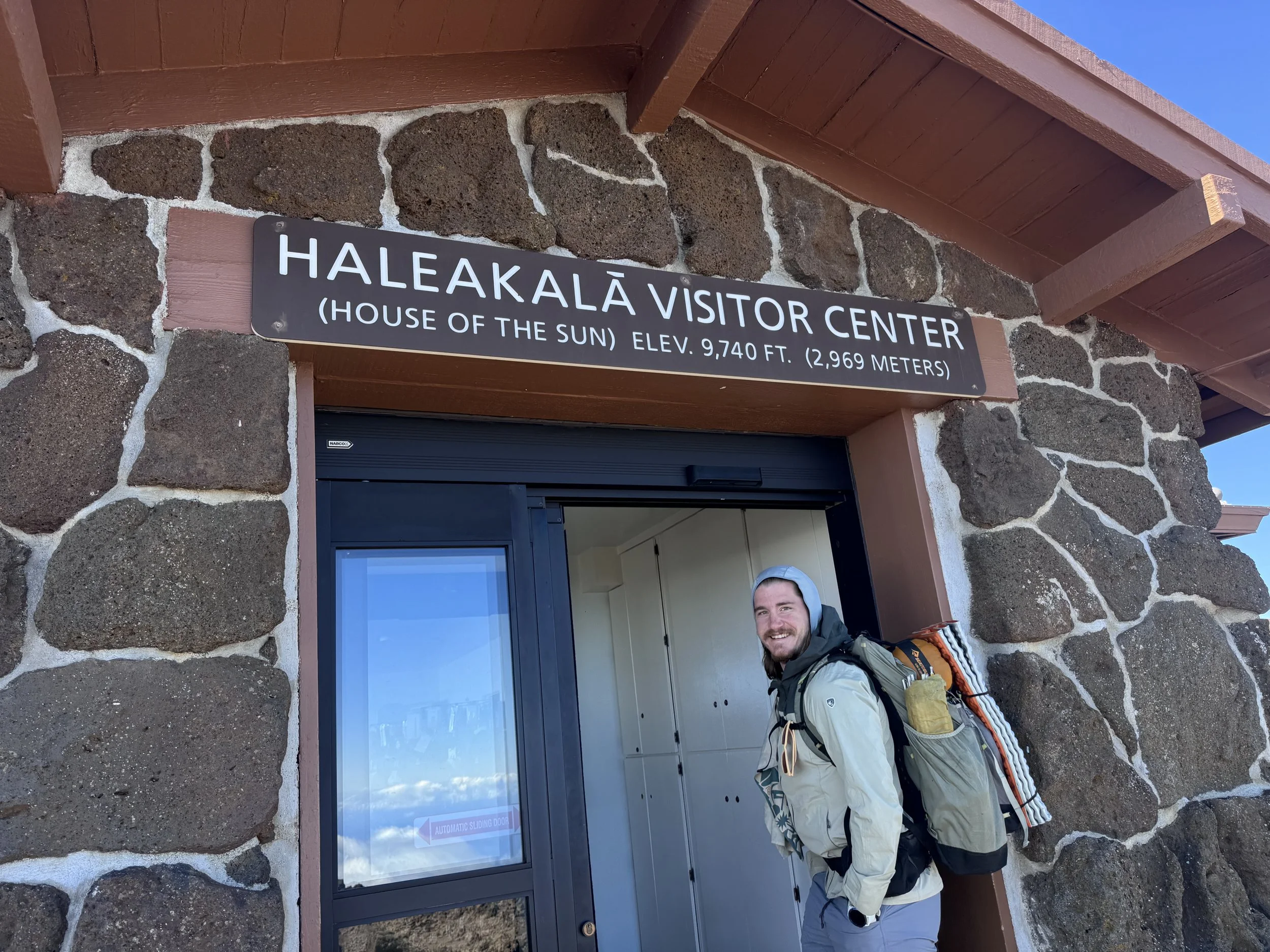
House of The Sun
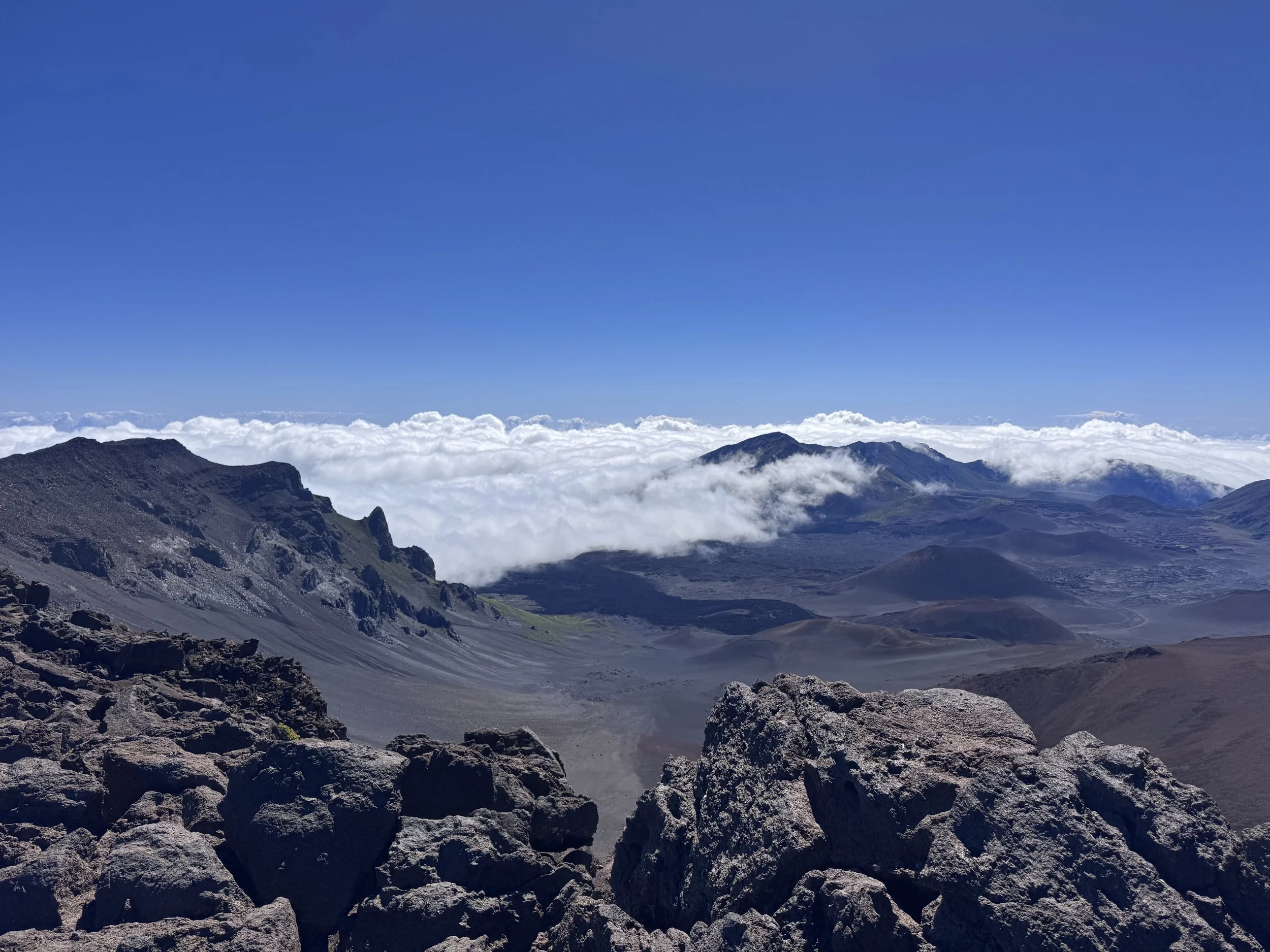
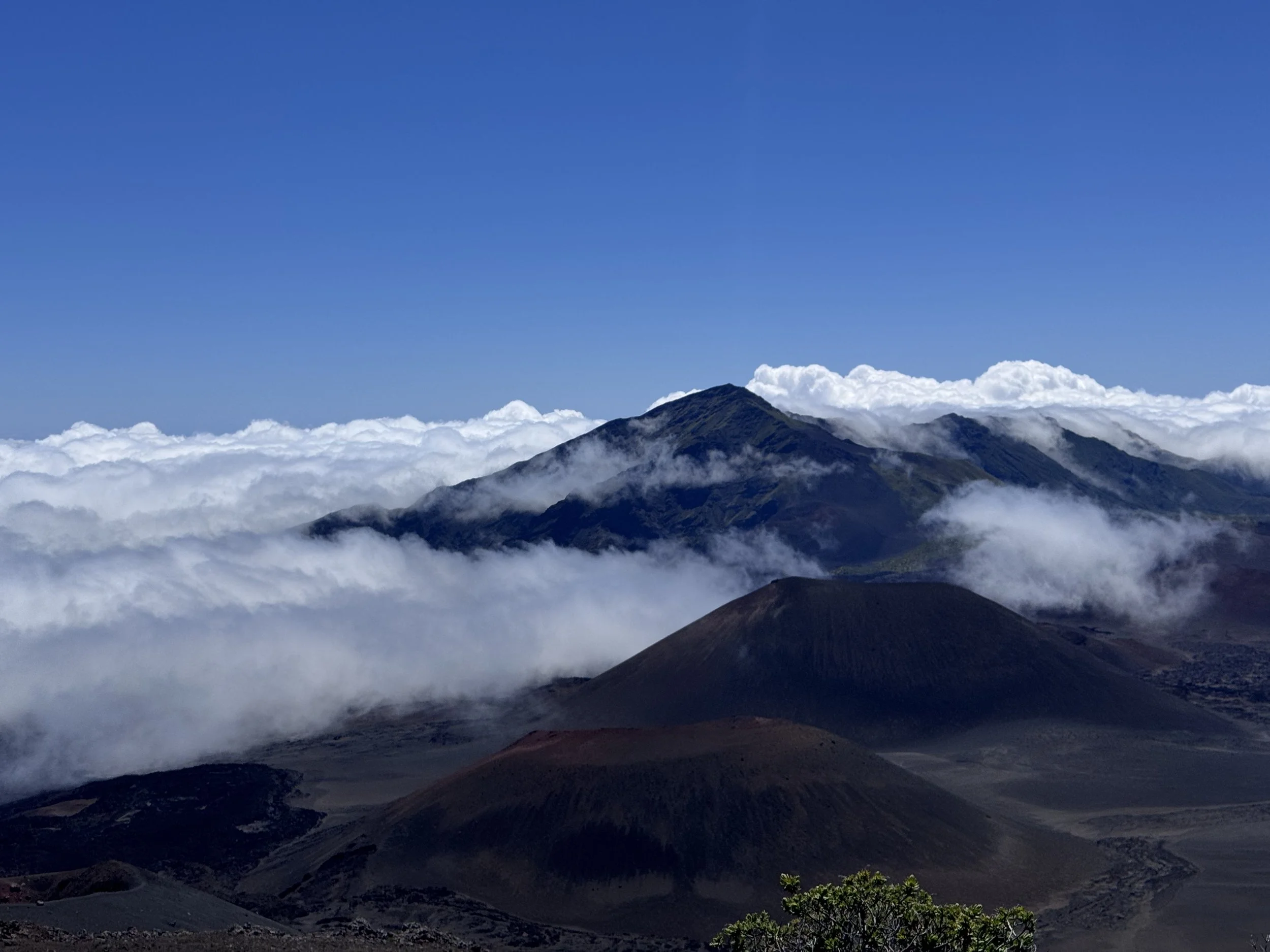
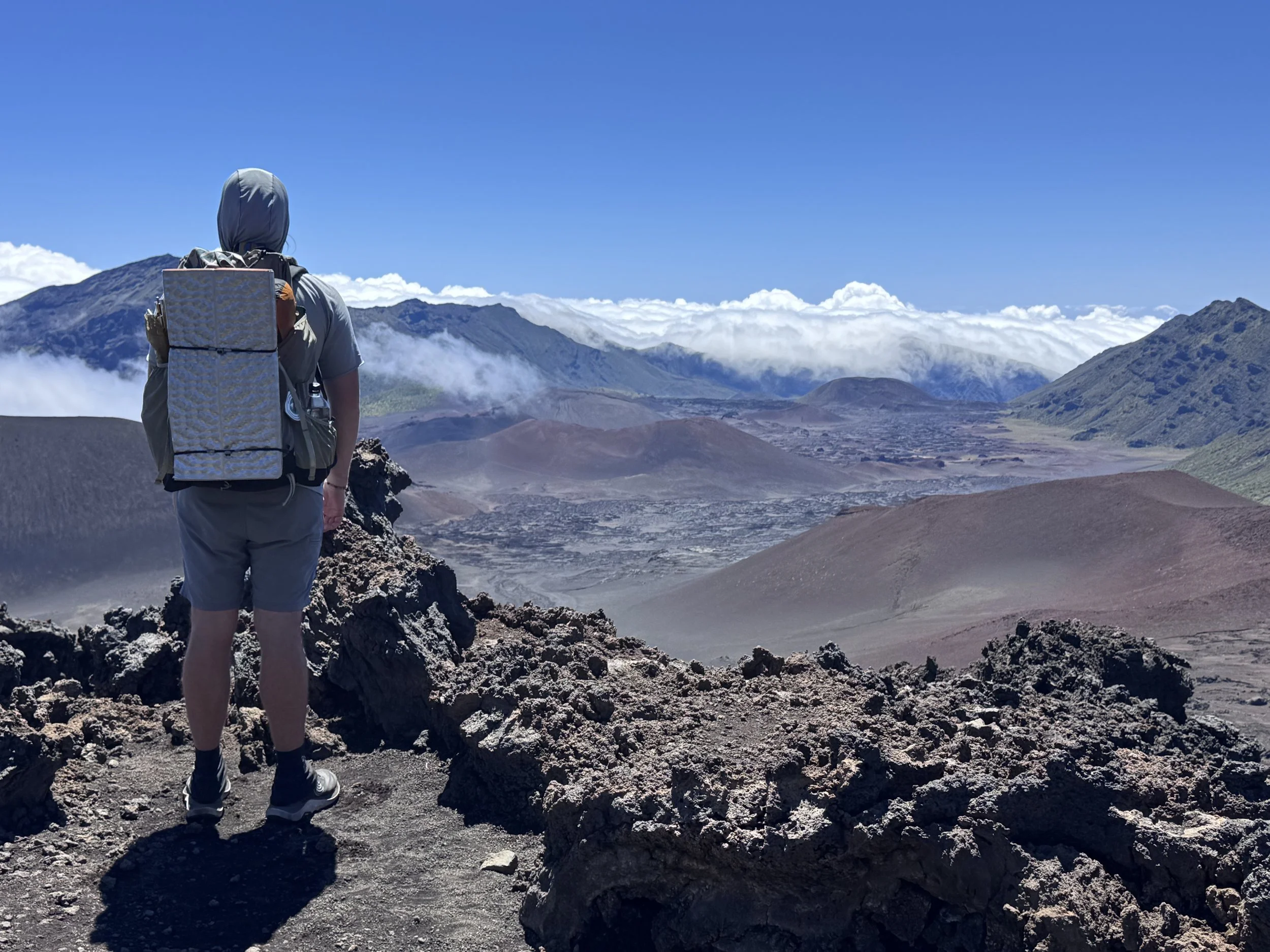
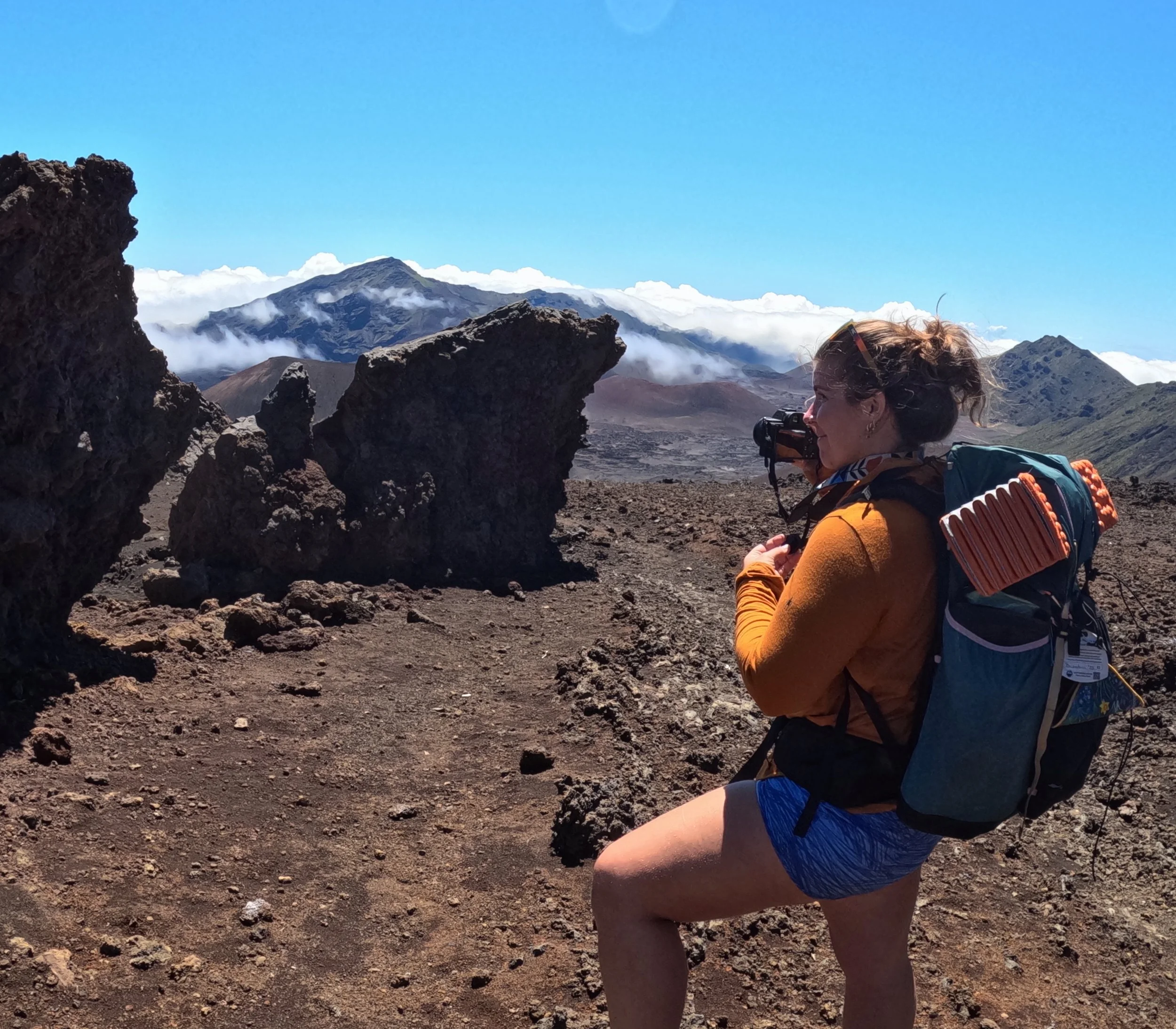
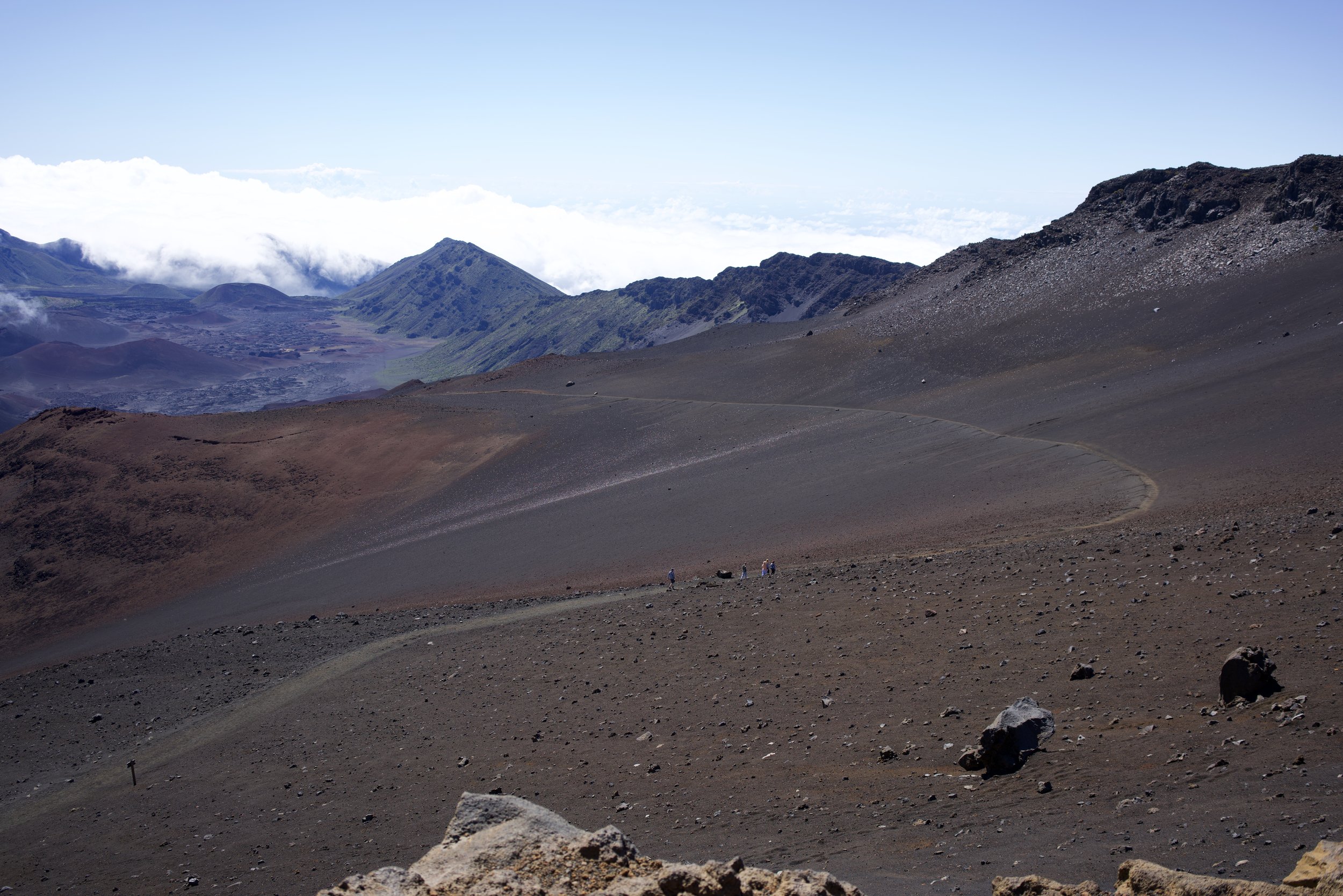
The views were just endless at 9,740 feet. When you think of visiting the Hawaiian islands, I don’t think people often think about how much elevation there is on some of the mountains. We could see the ocean shores in the distance, and we were well above the cloud line, looking down on the towns below. The volcanic rock bordered every eye shot as we approached our trail.
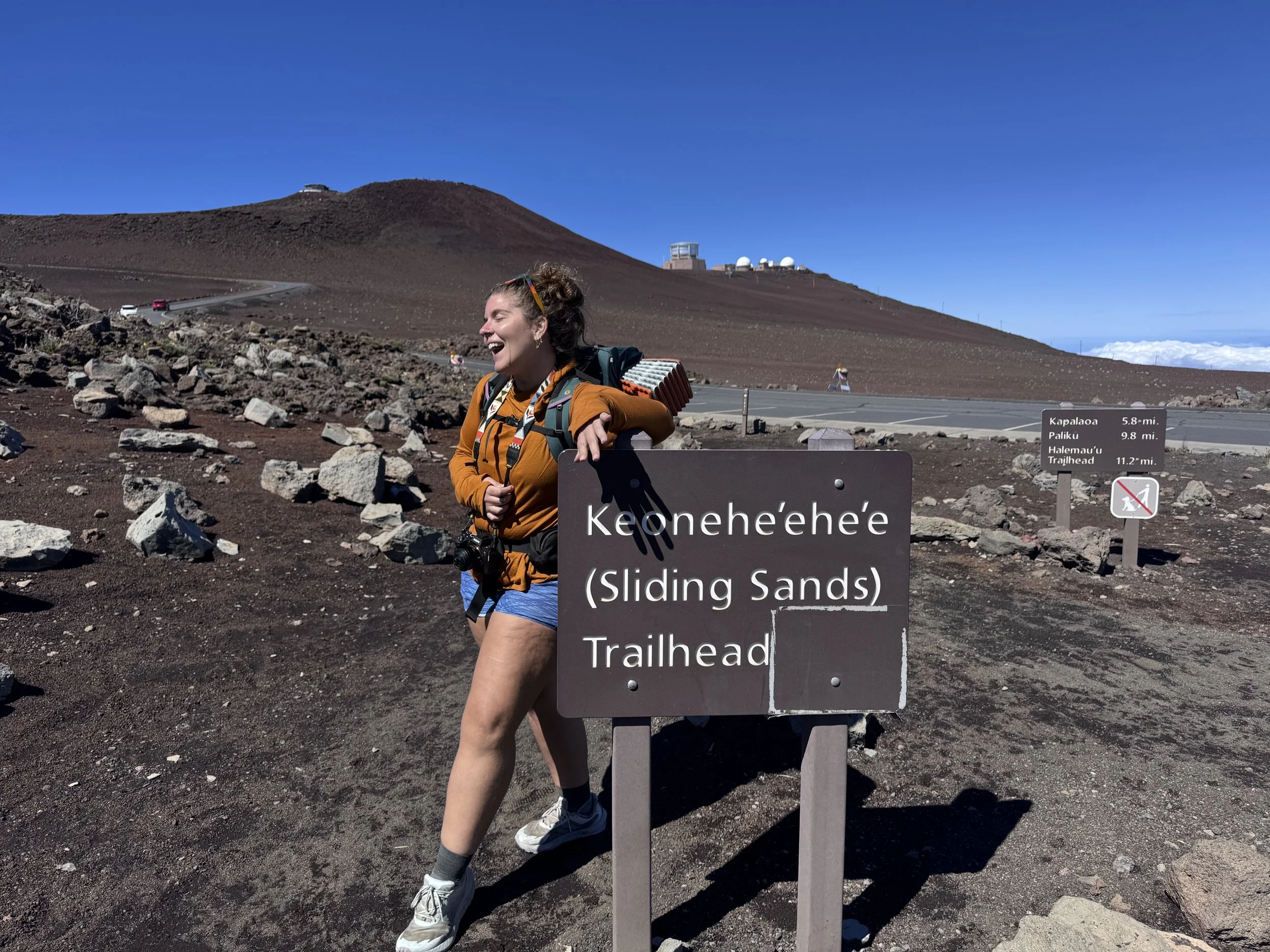
The Sliding Sands Trail (Keoneheʻeheʻe) would take us to our connecting trail all the way to our first campground of the night, Paliku. We hiked down 3,000 feet descent in dark volcanic sand. We took a small break at the bottom and dried out our tent from the night before.
The family members we arrived with caught up to us and sat nearby. All of us were eating snacks, taking a break, and soaking in the views. We were welcomed with a beautiful sunny day all day.
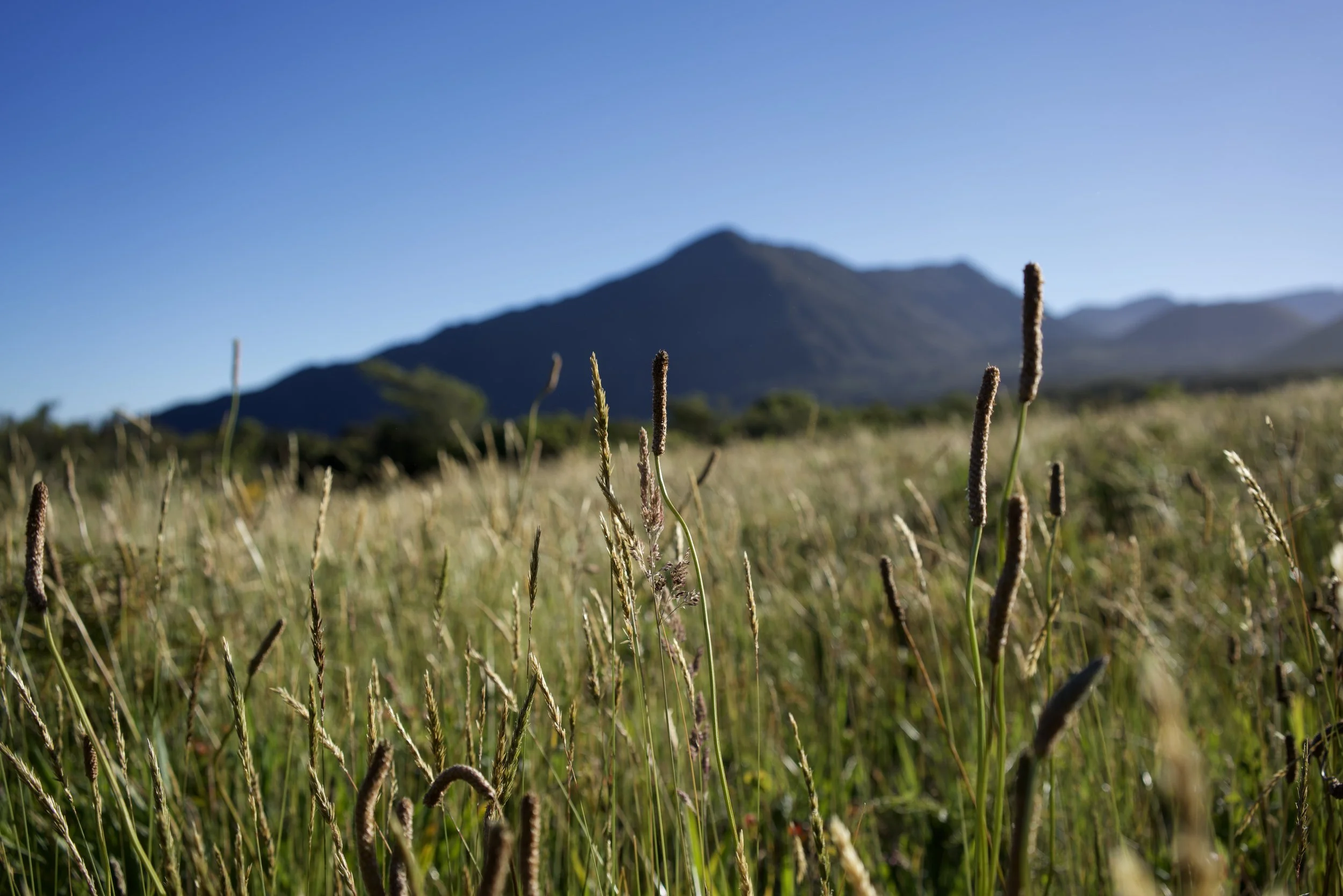
Around noon, we continued on our journey, quickly passing the Kapalohoa cabin. At the cabin, we lost our trail for a moment, found it again, then kept hiking. We passed by a trail maintenance crew cleaning up the trails and trimming overgrown brush. Our trail switched from sand to volcanic rock, to lush tropical greens and growth. Our terrain was changing so quickly, even over the course of a handful of miles.
Paliku Campground
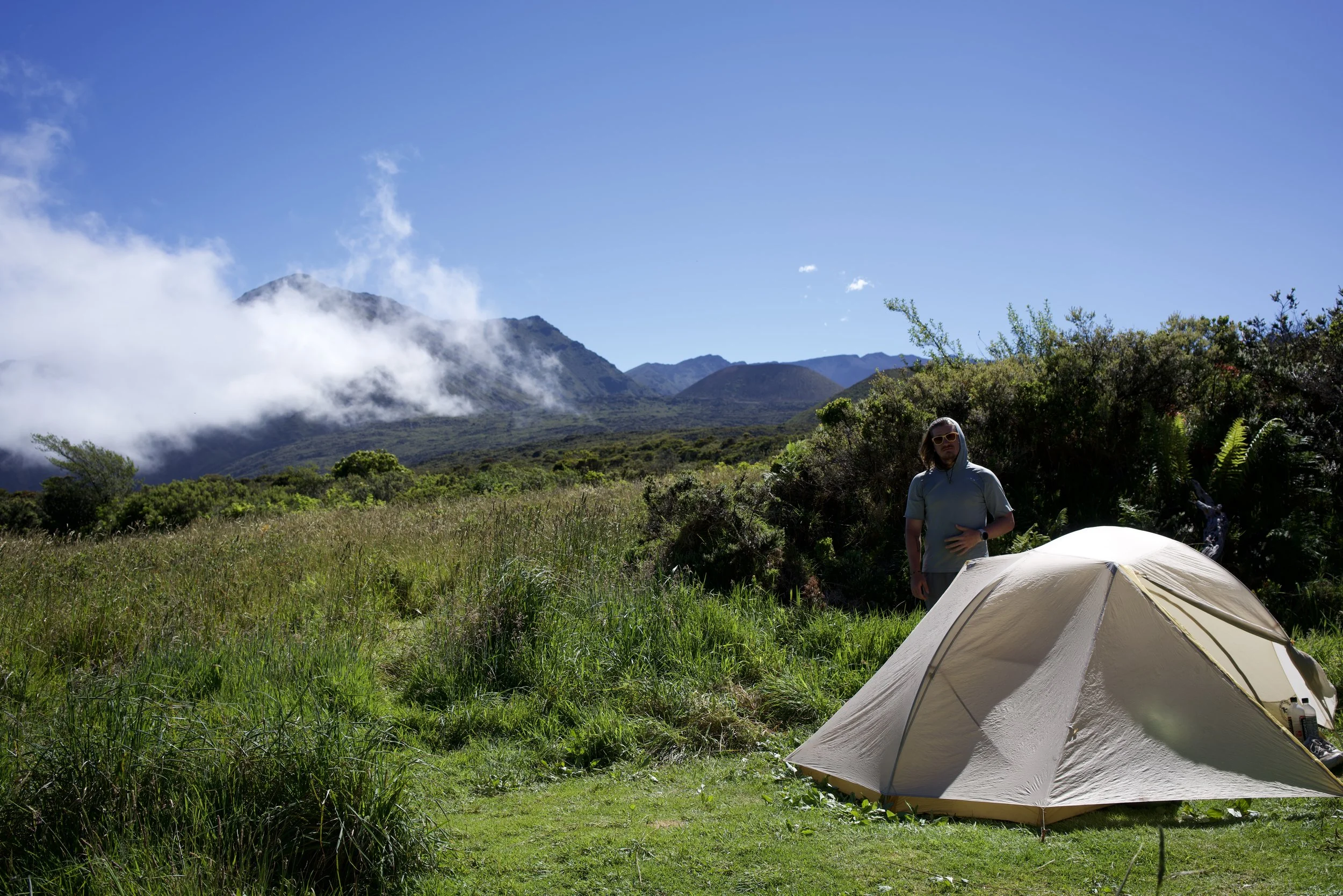
We hiked about 10 miles the first day, due to our side quest around the cabin, and arrived at our reserved site at Paliku campground at 3 PM. Paliku campground 4 was honestly somehow an unplanned, perfect campsite, too. There is potable water at each of the campgrounds and a pit toilet. I tried to consider how this trip would feel if I had just rented a car and driven here versus hitching from the airport. Somehow, part of me feels like it wouldn’t quite be the same.
Stats in the Wilderness
Temperature Range: 68° - 81°
General Location: Sliding Sands Trail to Paliku Campground - Haleakala National Park in Maui
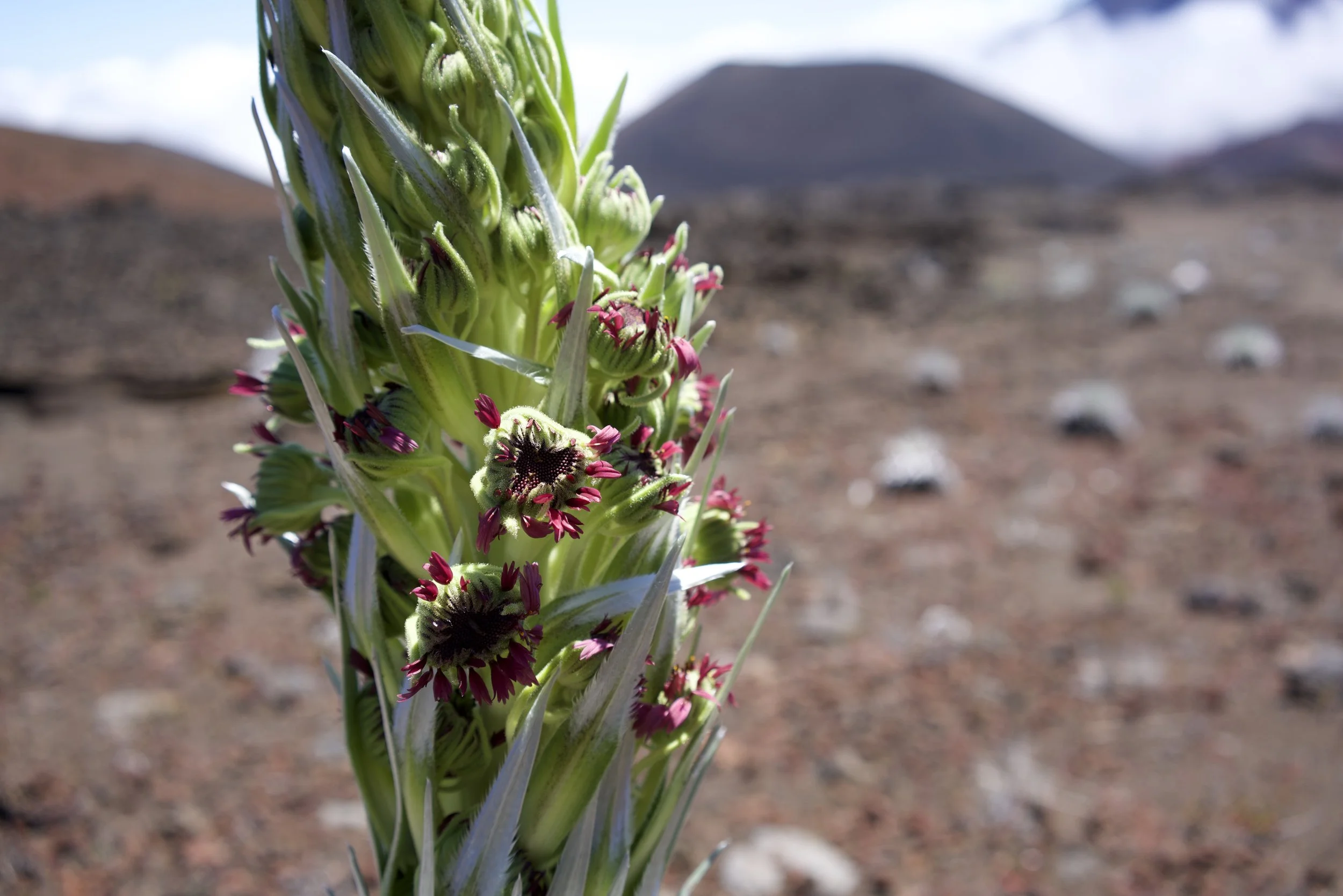
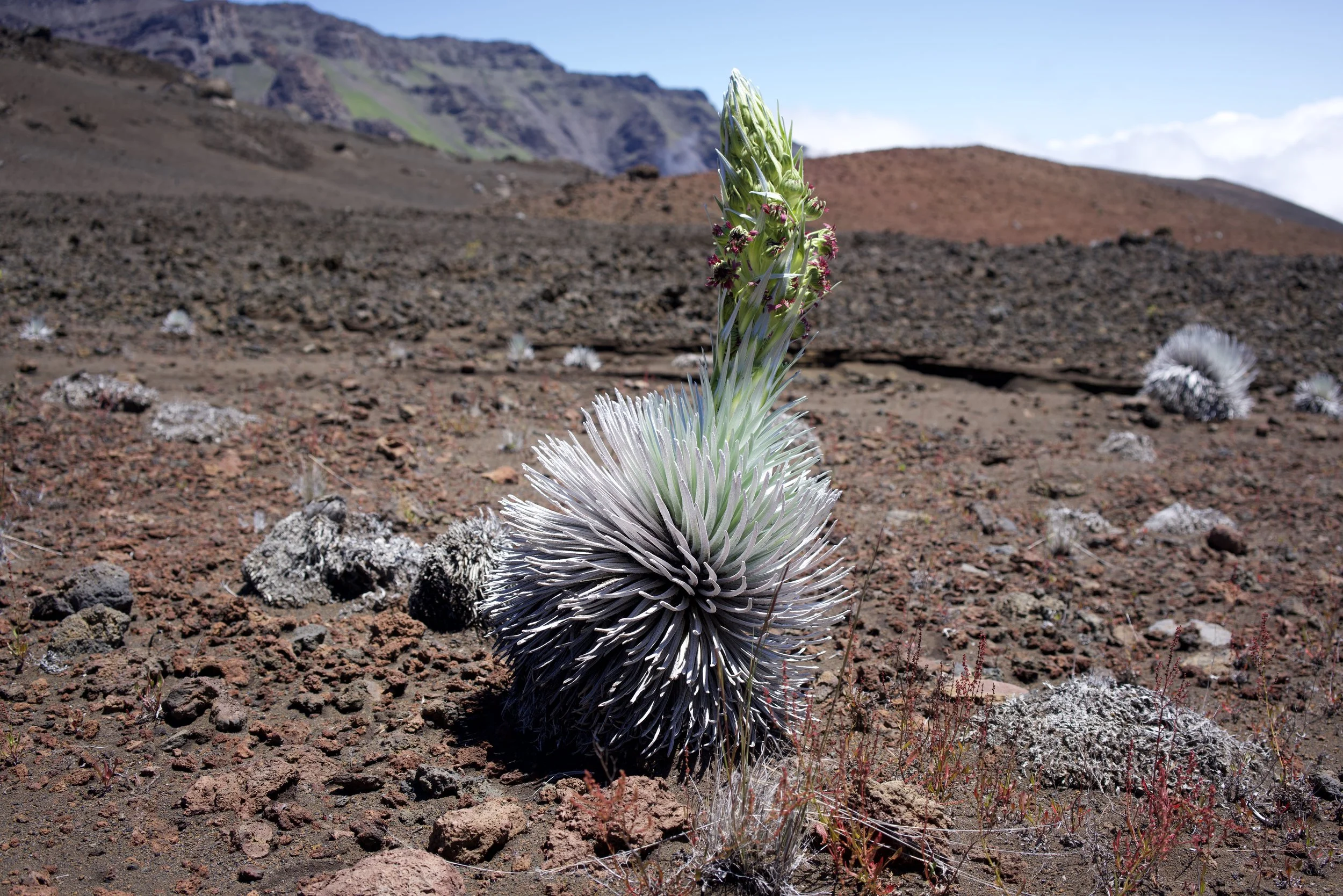
Interesting Fact: Silversword, the silver plant with blooms, can live 20-90 years. It blooms once, scatters its seeds, and dies.
Whose land am I on? Learn why it’s important to respect the land we travel on.
